How to Evaluate Vape Hardware Quality: A 20-Point Checklist for Cannabis Brands
- Share
- publisher
- Transpring
- Issue Time
- Jul 16,2026
Summary
A comprehensive 20-point checklist for evaluating cannabis vape hardware quality across material safety, structural design, performance, and manufacturing capability. Score suppliers on a 1-5 scale and benchmark against industry standards.

Choosing a cannabis vape cartridge manufacturer is one of the highest-stakes decisions a cannabis brand makes. Unlike packaging or marketing collateral, hardware failures show up directly in the consumer's hand — a leaking cartridge or a burnt hit doesn't just cost you a return. It costs you a customer, a shelf reset, and sometimes a compliance headache you didn't see coming. This guide offers a structured vape hardware quality checklist — a 20-point framework for evaluating cannabis vape hardware across four dimensions: material safety, structural design, performance, and manufacturing capability. Use it during supplier audits, sample testing, or as a scorecard when comparing an OEM/ODM vape cartridge manufacturer against another. Substandard hardware creates a chain reaction that extends well beyond the product itself. A leaking cart triggers a refund. A refund triggers a negative review. A pattern of negative reviews triggers delisting from a dispensary's reorder list. Multiply that across a state-wide distribution network, and a $0.30 savings on a cheaper coil can translate into six figures of lost revenue — before anyone even considers the liability exposure from a heavy-metal contamination report gone public. Quality is also the foundation of a durable supplier relationship. Brands that treat hardware evaluation as a one-time gate before the first PO tend to discover problems mid-scale-up, when switching costs are highest. Brands that build an ongoing scorecard into their sourcing process catch drift early and hold suppliers accountable with data instead of anecdotes. Key takeaway: A structured quality evaluation framework replaces guesswork with a repeatable, defensible process you can apply to every supplier conversation, every sample batch, and every scale-up decision. Score each of the 20 points below on a 1–5 scale during supplier evaluation. The framework covers four critical dimensions — material safety, structural design, performance, and manufacturing capability — giving you a comprehensive view of any vape hardware partner. Every batch of wetted-path components — coils, wicks, mouthpieces — should come with third-party lab results for lead, cadmium, arsenic, and mercury migration, tested under simulated heating conditions rather than at room temperature. Any component in direct contact with vapor or e-liquid should carry food-grade or medical-grade documentation (e.g., FDA food-contact compliance, USP Class VI) rather than a generic "safe material" claim. In a ceramic core cartridge, heating elements vary widely in porosity and metal-oxide composition. Request the ceramic's material spec sheet and ask specifically whether it's free of lead-based glazes or binders. Cartridge tanks and mouthpieces should be built from borosilicate glass or medical-grade plastics such as PCTG — not commodity-grade resins that can leach under heat or degrade with prolonged oil contact. These EU directives restrict hazardous substances in electronic and consumer components. Compliance documentation is a useful proxy for a supplier's broader regulatory discipline, even outside EU markets. Evaluate the airway geometry for restriction points and condensation traps. Poor airflow design is a leading cause of both weak draws and leaking. Look closely at O-ring placement, gasket material, and the number of sealing points between the tank and the heating chamber — this is the single biggest predictor of leak rate and the core of any vape cartridge leak prevention strategy. Ask for the supplier's tolerance specifications (typically ±0.02–0.05mm on critical dimensions) and how they're verified — CMM inspection, not just visual QC. Even within the "510 thread cartridge" standard, thread pitch and depth vary between factories. Test cross-compatibility with the batteries your brand actually ships with, not just a generic 510 battery. Drop tests and torque tests on the mouthpiece and base should be part of any incoming inspection, particularly for glass cartridges. Coil resistance should fall within a tight tolerance band (typically ±0.05Ω) across a sampled batch. Wide variance here signals inconsistent heating and inconsistent vapor production unit to unit. Thermal imaging during a puff cycle should show even heat distribution across the coil surface. Hot spots are the primary cause of burnt or "dry" hits. After a cartridge is run to empty, weigh the residual oil left in the wick and chamber. Anything above 3–5% residual suggests inefficient wicking design — and lost product cost. Independent puff-count testing under standardized draw parameters tells you whether the hardware maintains consistent vapor output through the full oil load, not just for the first 50 puffs. Run a batch through repeated draw cycles at varying temperatures and viscosities to measure clog incidence. Understanding the common vape cartridge clogging causes — wick saturation, airway restriction, viscosity mismatch — is essential for high-viscosity distillate and live resin formulations. A STMA licensed vape factory holds the State Tobacco Monopoly Administration permit required in China for e-cigarette and vape hardware manufacturing. Ask to see current, valid documentation rather than taking it on faith. An ISO 9001 certified vape manufacturer (and, ideally, ISO 13485 for medical devices) signals documented, repeatable QC processes rather than ad hoc inspection. Request historical on-time delivery data, not just stated capacity. A factory that can build 500K units but consistently ships late isn't a scalable partner. Understand the supplier's process for handling defect claims, batch recalls, and root-cause investigations. A supplier with no defined RMA process is a liability waiting to surface. A mature supplier will proactively offer a structured pre-production sample (PPS) and golden sample sign-off process — not just ship whatever's on the line. Score each of the 20 points on a 1–5 scale during supplier evaluation: Sum the scores across all 20 points for a total out of 100. As a general benchmark: Strong candidate for long-term partnership Viable for smaller runs, but negotiate improvement commitments before scaling Proceed only with extensive additional testing, if at all Weight the categories according to your product line — a brand running high-viscosity live resin, for example, should weight structural design and performance testing more heavily, since clogging and leaking are the dominant failure modes for those formulations. At Transpring, we built our QC infrastructure around this exact framework — not the other way around. Every batch ships with heavy-metal and RoHS/REACH documentation, our ceramic cores are sourced and tested for purity before they enter production, and our assembly lines run CMM-verified tolerance checks rather than visual-only inspection. On the manufacturing side, we hold current STMA licensing and ISO 9001 certification, and we maintain documented on-time delivery data that we share directly with prospective partners during audits — not just case studies. We're transparent about where independent verification adds value, which is why we welcome brands to run their own third-party testing against our samples rather than relying solely on our internal data. Vape hardware quality isn't a single checkbox — it's a system of material choices, design decisions, and manufacturing discipline that compounds across every unit you ship. A 20-point vape hardware quality checklist won't eliminate risk entirely, but it replaces guesswork with a repeatable, defensible process you can apply to every supplier conversation, every sample batch, and every scale-up decision.
Why Quality Evaluation Matters
The 20-Point Vape Hardware Quality Checklist
Material Safety
5 Points
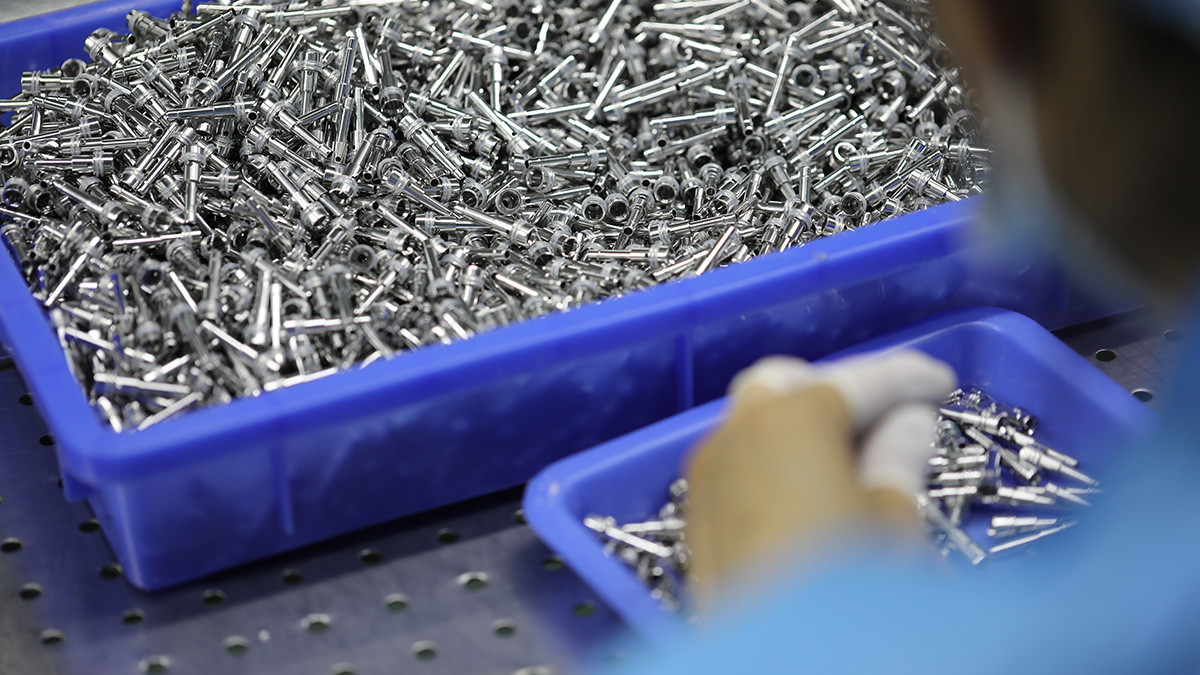
Heavy Metal Test Reports (Pb/Cd/As/Hg)
Food-Grade Material Certification
Ceramic Core Purity
Glass and Plastic Material Standards
RoHS/REACH Compliance
Structural Design
5 Points

Airflow Path Design
Sealing Structure
Assembly Tolerance Control
Thread Precision (510 Standard)
Overall Structural Strength
Performance Testing
5 Points

Resistance Consistency
Heating Uniformity
Oil Utilization Rate (Residual Oil)
Puff Count (Lifespan)
Clog Rate Testing
Manufacturing Capability
5 Points

STMA Production License
ISO Quality System Certification
Capacity and Lead Time Stability
After-Sales Support System
Sample Testing Process Maturity
How to Use This Checklist
How Transpring Performs