Illinois Cannabis Market 2026: Vape Trends & Top Brands
- Share
- publisher
- Transpring Research Team
- Issue Time
- Aug 13,2026
Summary
Illinois cannabis market analysis 2026: $403M in annual vape sales, a 39% tax burden, disposables overtaking cartridges on 1g/2g formats, and the multi-brand MSO playbook of GTI, Verano and Cresco Labs - plus what these trends mean for cannabis brands planning US expansion.
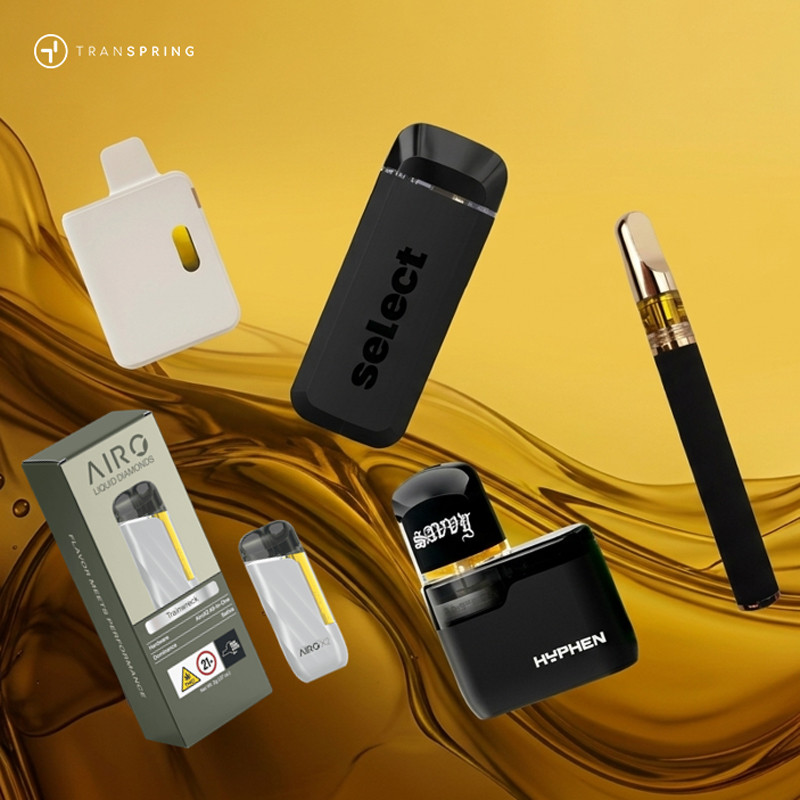
Illinois has quietly become one of the most important adult-use cannabis markets in the United States. With a population of 12.6 million, the sixth-largest state overall and the third-largest among states with legal recreational cannabis, and a GDP ranked fifth in the nation, Illinois combines market scale with real purchasing power. Adult-use sales began on January 1, 2020, making it the 11th state to legalize. Vape products now generate roughly $403 million in annual sales and hold about 27% of the total market. For any cannabis brand planning U.S. expansion, Illinois is no longer optional. It is a benchmark market whose structure, pricing, and brand dynamics reveal where the industry is heading.
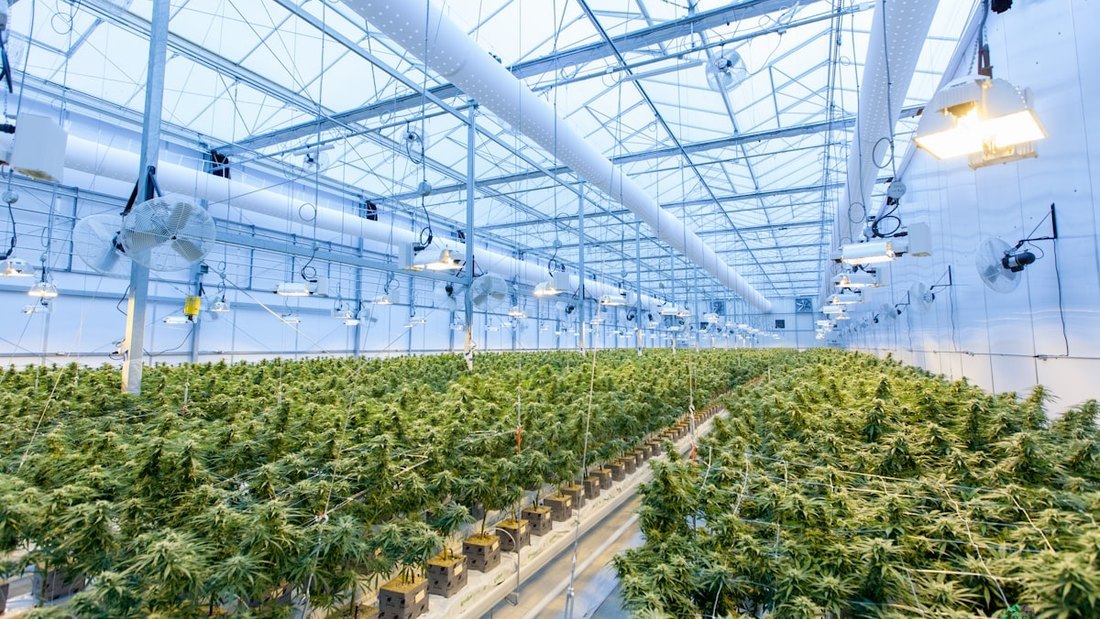
Illinois Cannabis Market at a Glance
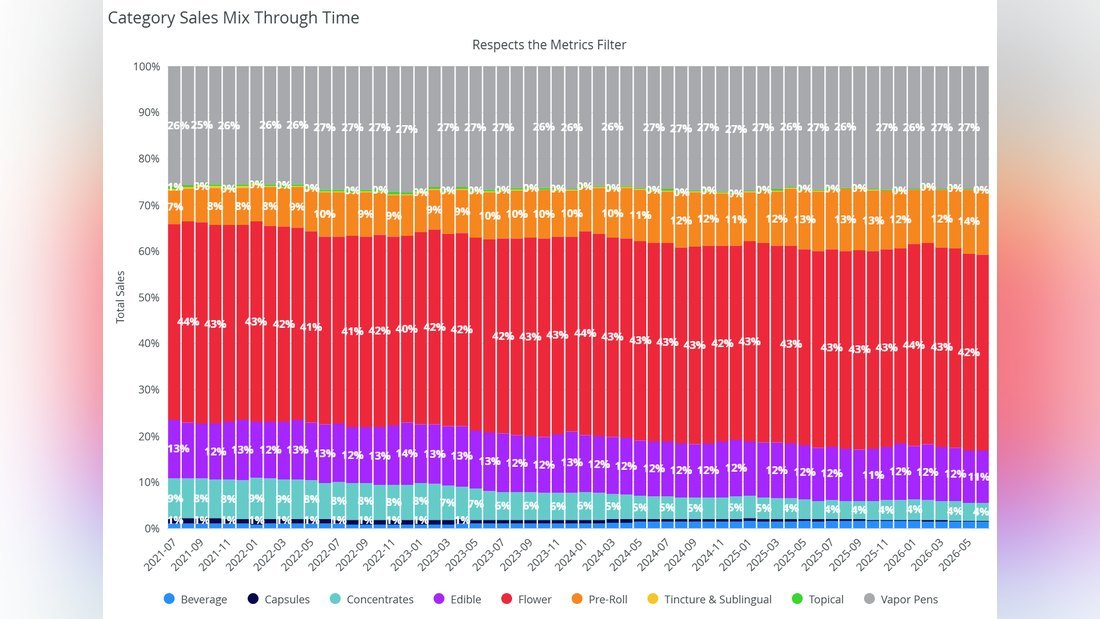
Flower remains the dominant category at 42% share, but vape is the clear number two at 27%, followed by pre-rolls at 14% and a long tail of edibles, concentrates, and tinctures. What makes Illinois distinctive is brand concentration: the top five brands control 33% of the market, the top ten control 49%, and the top 24 control 73%. That concentration reflects a licensing system built for scale. The earliest medical license holders became the multi-state operators (MSOs) that dominate the state today. For new entrants, this means competition is not just about product quality; it is about distribution, shelf presence, and the ability to operate inside a tightly regulated system.
Inside the Illinois Vape Market
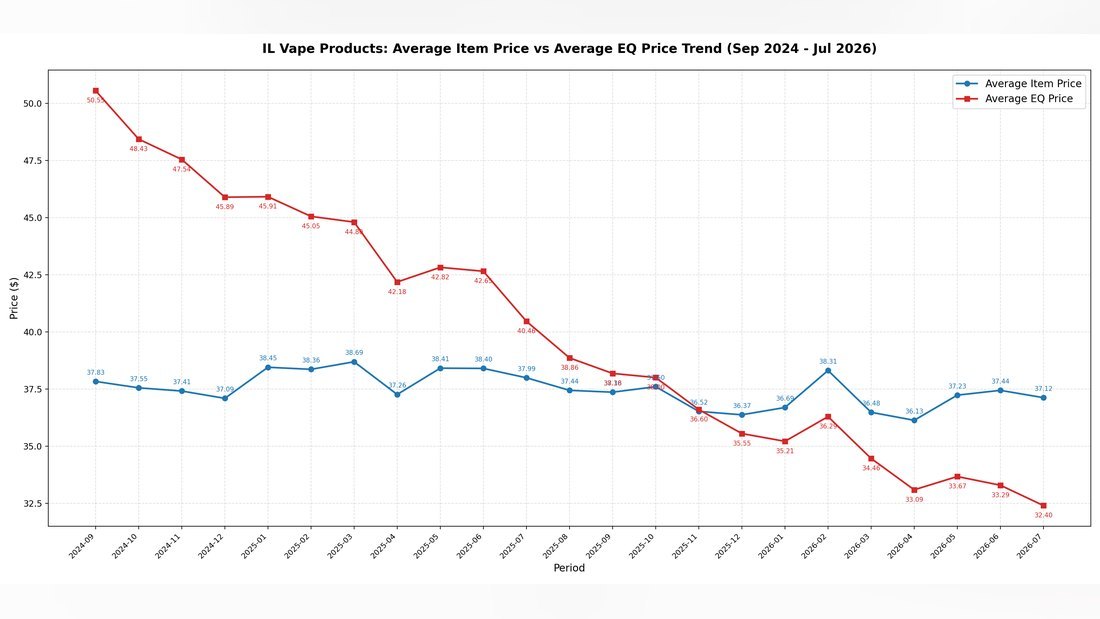
Illinois vape sales sit in the mid-to-high range nationally at around $403 million annually, and average prices are among the highest in the country. Interestingly, although equivalent (EQ) prices have been declining, shelf prices have stayed remarkably stable at $35 to $40 since 2024, a clear sign that brands are using a “more product, same price” strategy rather than outright discounting. Volume growth, however, tells a different story: growth is among the slowest of the major states, and last year it even turned negative, a striking contrast to peers like Colorado, Massachusetts, and Washington, which sell more vape units despite smaller populations.
Two structural factors hold volume back. First, supply is tightly controlled: retail licenses are capped at 500 and allocated through a competitive scoring and lottery system, while large-scale cultivation licenses are capped at 21, all issued, and craft grower licenses at 150 with area limits. Sparse retail coverage pushes some consumers toward the unregulated market, and scarcity gives dispensaries strong pricing power. Second, Illinois carries one of the highest tax burdens in the country, an average of 39%, which visibly inflates shelf prices and diverts a meaningful share of price-sensitive demand to the black market.
Format Shift: Disposables Overtake Cartridges
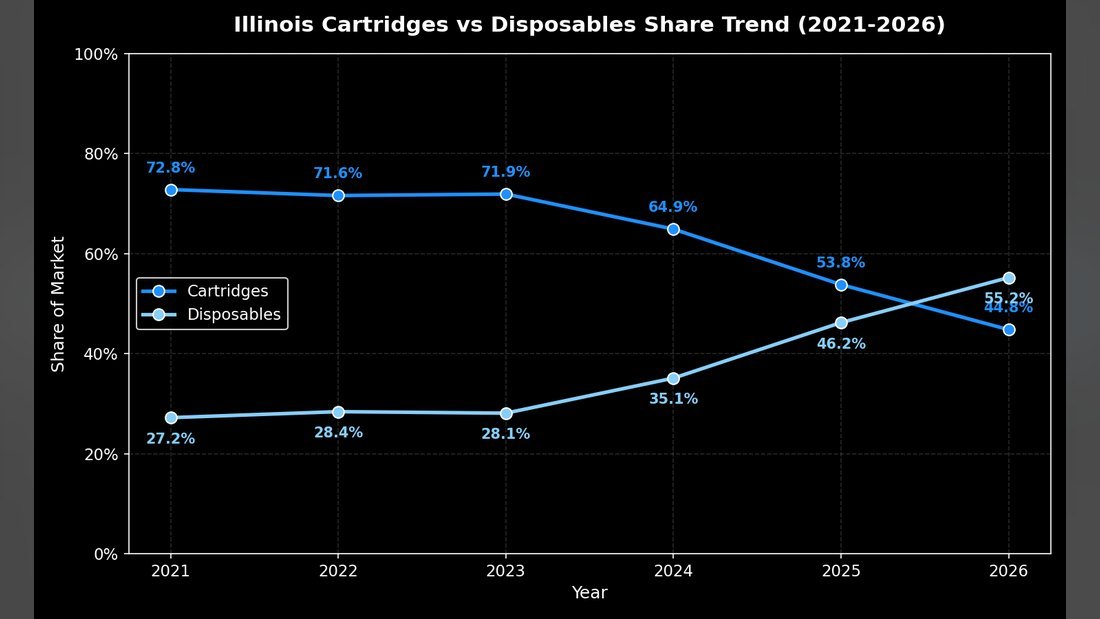
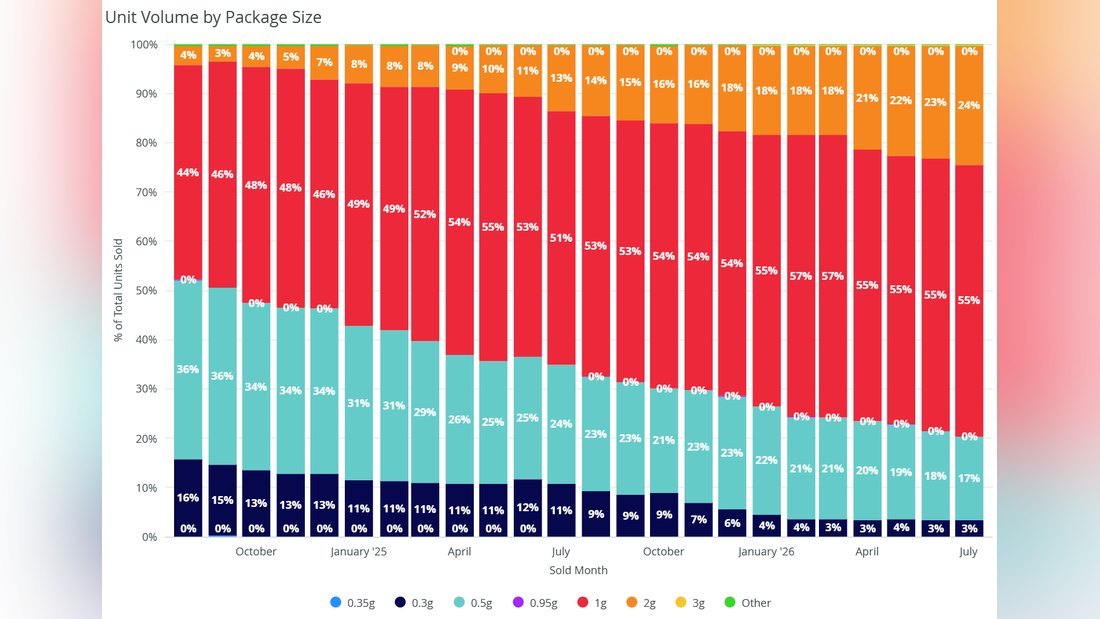
The biggest structural change in Illinois has been the rise of disposables. Since 2023, disposables have overtaken cartridges to become the dominant vape format, driven almost entirely by 2g products. In the overall vape market, 1g holds about 55% share and is still growing, 2g has gained roughly 20 points in two years, while 0.5g and 0.3g formats have lost significant ground. In cartridges specifically, 1g now accounts for 71% of sales, with 0.5g fading and 2g holding a steady 3 to 4%. On the oil side, distillate remains the workhorse at 74.8% of the market, with live resin at 18.5% and diamonds beginning to trend upward in recent quarters.
Top Brands and the MSO Playbook
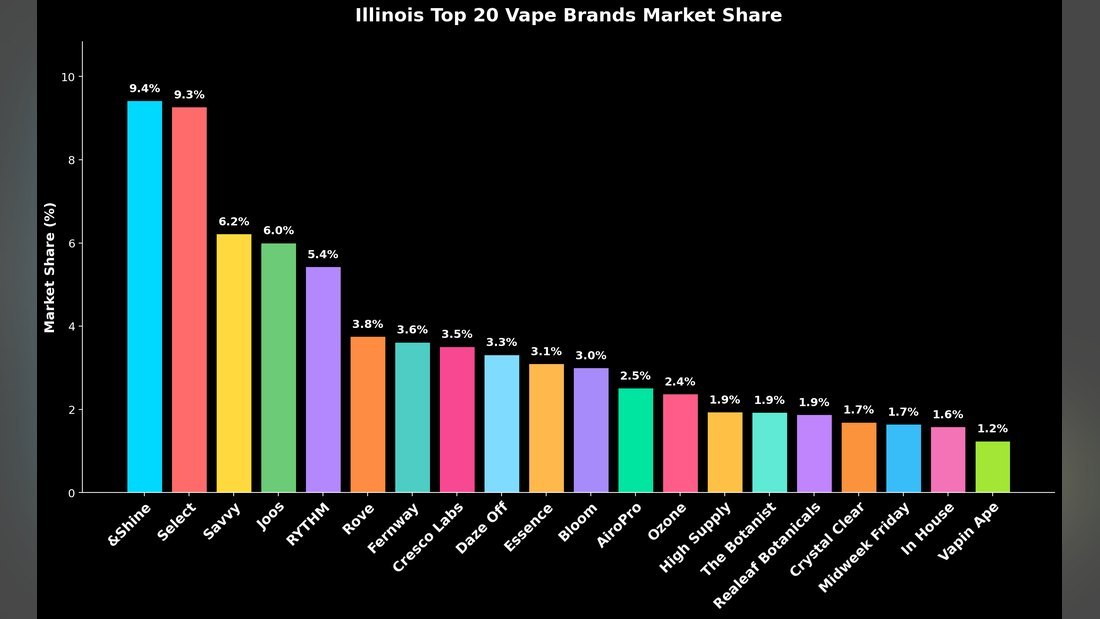
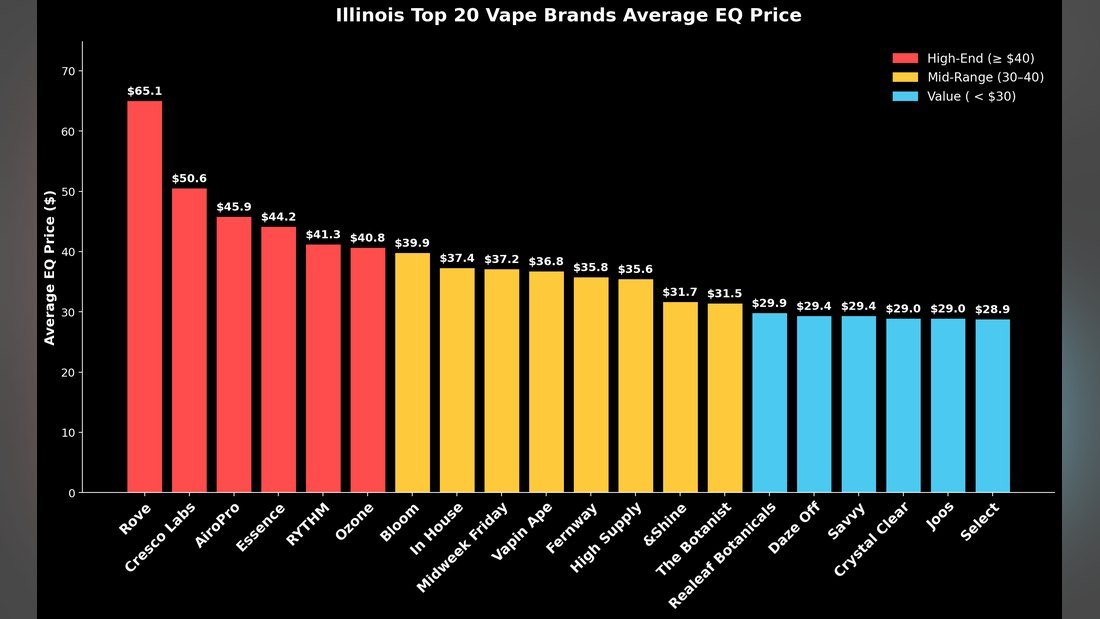
The Illinois vape market is dominated by a small group of players. &Shine and Select are the clear leaders, together holding 18.7% of the market. GTI’s portfolio, &Shine and RYTHM, accounts for 14.8% of top-20 vape brands, Verano Holdings, Savvy and Essence, adds 9.3%, and Cresco Labs, Cresco and High Supply, contributes 5.4%. The winning playbook across all three MSOs is multi-brand price laddering: RYTHM at premium and &Shine at value; Essence at premium and Savvy at value; Cresco at premium and High Supply at value. ROVE commands the highest average equivalent price, roughly $15 above the second-place brand, while at the value end competition is fierce, with price gaps often under one dollar.
These MSOs were not built overnight. GTI, Green Thumb Industries, was founded in Chicago in 2014, went public in Canada in 2018, and today ranks third among listed global cannabis companies by market capitalization, operating in 14 states. Verano Holdings, also Chicago-based, operates in 13 states, and Cresco Labs, founded in 2013, runs a fully vertical seed-to-retail operation across 9 states. Their dominance traces back to 2013, when Illinois opened one of the nation’s first regulated medical cannabis markets with extremely scarce licenses, roughly 22 cultivation centers and 60 dispensaries. Only well-capitalized teams won those licenses, and when adult-use legalization arrived in 2019 and 2020, existing license holders received priority approval, effectively inheriting the recreational market.
How Out-of-State Brands Get In
For brands that did not hold an Illinois license, there are exactly two proven entry routes. About half of the top-20 brands entered by acquiring a licensed local operator: Select acquired Grassroots, Acreage acquired Nature’s Care for The Botanist, and Ascend, 4Front, and MariMed followed similar paths. The other half used asset-light licensing partnerships: ROVE partnered with CNS Harvest, while Fernway, Bloom, Airo, and Vapin Ape entered through brand-licensing and contract-manufacturing deals, avoiding the cost and complexity of vertical integration.
What This Means for Cannabis Brands
- Capacity is the new value lever. 1g and 2g formats, combined with stable pricing, are winning. “More for the same price” outperforms discounting in a high-tax market where consumers feel every dollar.
- Oil differentiation matters. Distillate is the volume base, but live resin and diamonds are the growth premium segment. A tiered oil strategy protects margins and builds brand loyalty.
- Hardware partners are brand assets. Vape hardware reliability and innovation directly shape the consumer experience and repeat purchase, and a proven partner helps brands stand out on crowded dispensary shelves.
- High taxes reward value perception. In a 39% tax environment, transparent value messaging and predictable pricing build loyalty where aggressive discounting would destroy margins.
The Bottom Line
Illinois is a mature, high-tax, license-capped market where growth now comes from format innovation and portfolio discipline rather than market tailwinds. For cannabis brands, the data points to a clear playbook: build a multi-brand portfolio, invest in high-capacity vape formats with stable pricing, differentiate oils, and choose hardware partners with a proven track record. As more states mature along the same path, the lessons from Illinois will keep compounding. The brands that learn them first will have the strongest shelf presence when the next wave of markets opens. Want to dig deeper into the hardware behind the top Illinois vape brands? Browse our vape hardware lineup or explore more cannabis market analysis on our blog.