Massachusetts Cannabis Vape Market Report: What Brand Builders Should Know
- Share
- publisher
- Transpring
- Issue Time
- Oct 24,2026
Summary
A data-led look at the Massachusetts cannabis vape market: category share, the flattening of shelf prices since mid 2024, disposable overtaking cartridge, the distillate versus live resin split, and the routes brands use to enter. Closes with four signals for cannabis brands planning their next stage of growth.

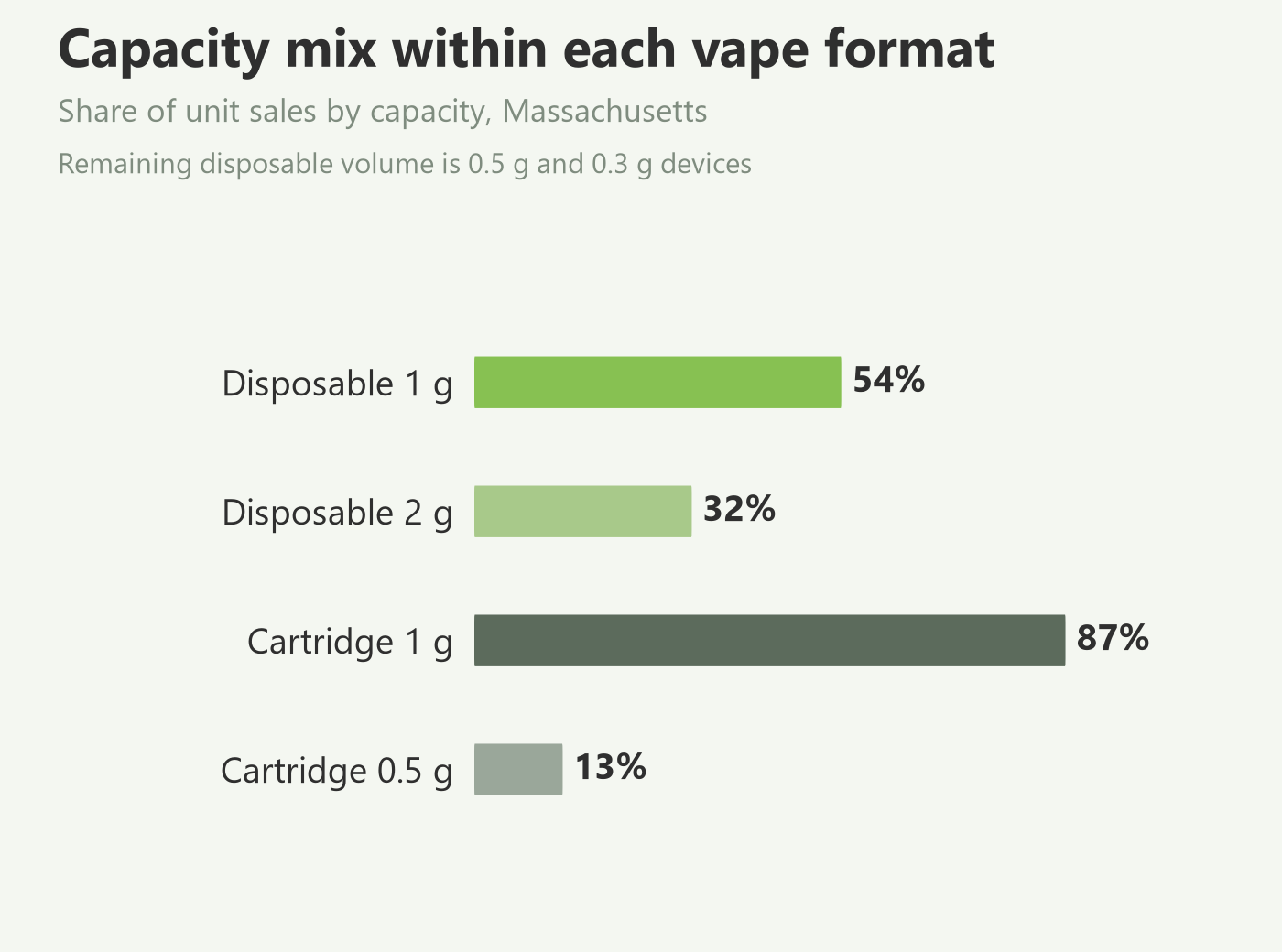
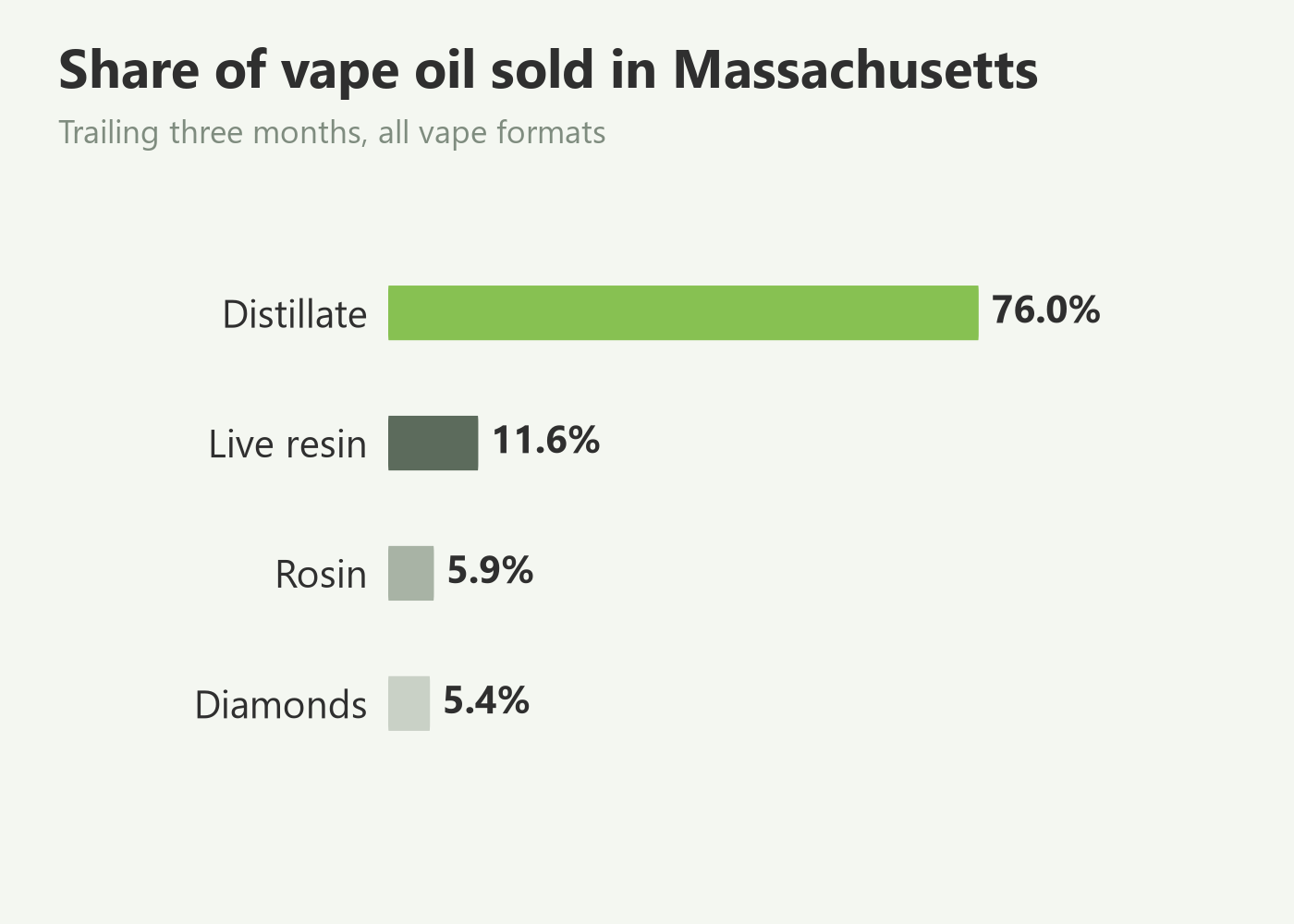
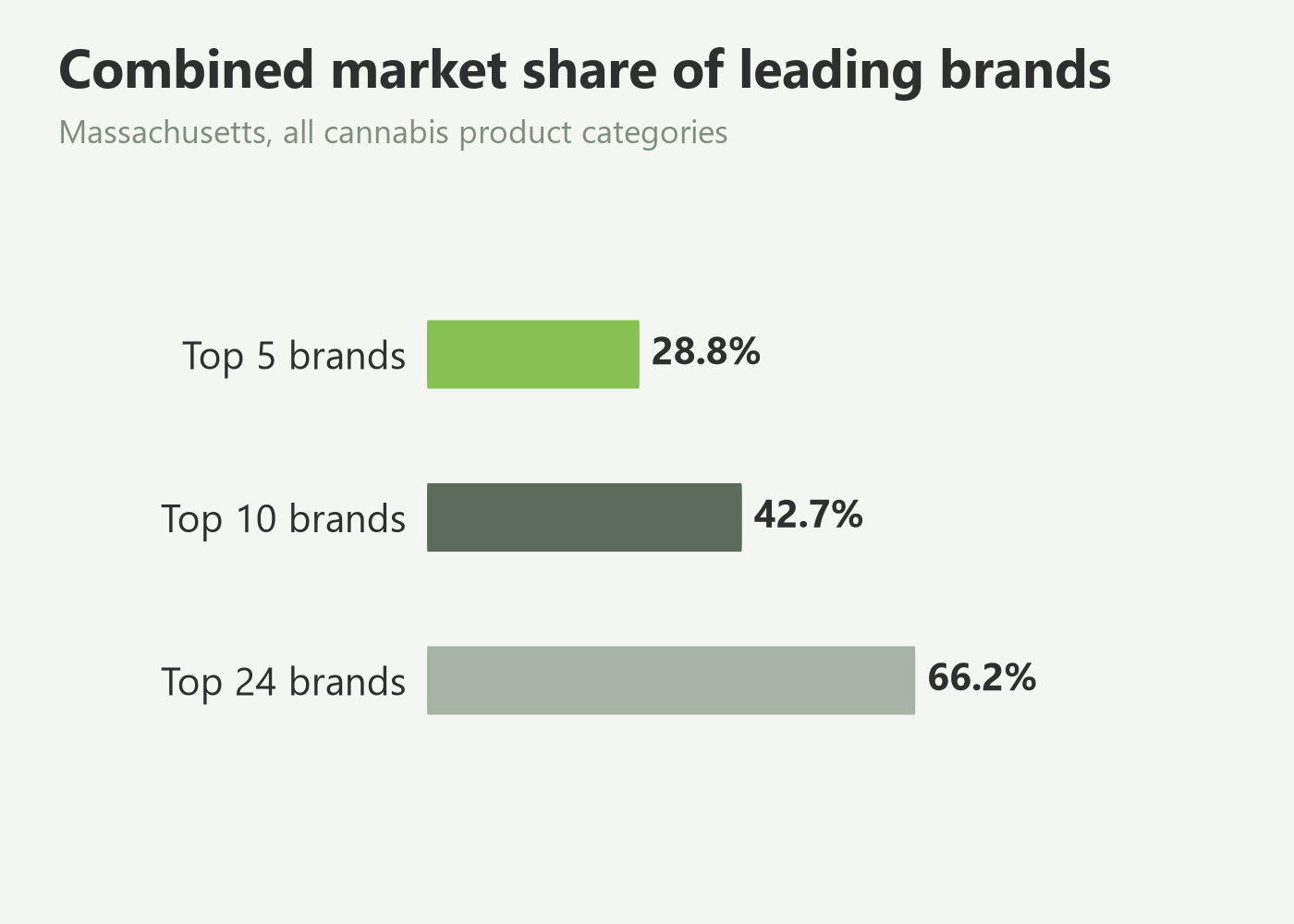
Market Report Massachusetts is no longer a market where a cannabis vape brand wins on packaging alone. Shelf prices have flattened, the top of the category is concentrated, and disposable devices have just overtaken cartridges. The pattern is consistent: in a mature adult-use state, hardware performance increasingly shapes whether a brand earns a repeat purchase. Here is what the Massachusetts numbers say, and what they mean for the next product roadmap. Massachusetts holds roughly seven million residents, the tenth largest economy among adult-use states, and it opened licensed retail in November 2018. The vape category alone runs near 350 million dollars a year. Having legalized early and rebuilt the category after a 2019 statewide sales ban, the state has already absorbed shocks that newer markets are still working through. What performs here tends to travel to New Jersey, Connecticut, New York and Maryland. Flower still leads near 37 percent, but pre-roll and vape have taken share from it. Vape and pre-roll now sit within a point of each other at roughly 23 percent, with edibles around 11 percent. Vape is not an accessory category here. It is a core revenue line carrying its own margin, compliance load and device roadmap. Average prices for disposables and cartridges have fallen continuously since legalization. The detail that matters is what happened after mid 2024: the decline flattened. That is not a recovery. It looks more like a floor. Pricing now splits into two camps. PAX and ROVE sit roughly 13 to 14 dollars above the next tier. Below them a dense middle band between about 29.5 and 32.3 dollars carries Holiday, In House, Dime Industries, Jeeter and Fernway. The gaps between tiers are narrow, so retail pricing here is already highly sensitive. Cartridge share fell for several years without interruption. In October 2026 disposable share crossed above cartridge, and the gap is widening. Capacity tells the same story. In disposables, one gram leads at around 54 percent, but two gram devices have climbed to roughly 32 percent and are still rising while half gram and 0.3 gram shrink. Over the next couple of years, the category looks like a one gram and two gram business. Cartridges moved the other way. One gram passed half gram in August 2024 and now holds about 87 percent of the format, while two gram cartridges have essentially no market. The formats are diverging. This is where launch plans often run into trouble. Distillate holds roughly 76 percent of the market and is still accelerating. Live resin is second at about 11.6 percent, then rosin at 5.89 and diamonds at 5.38. The format mix varies by brand. DIME runs on 81 percent live resin, Jeeter on 79 percent diamonds, and ROVE on 76.6 percent live resin. At the volume end, Fernway works at 95 percent distillate and Perpetual Harvest at 98.6 percent. Two strategies, two hardware requirements. High-volume distillate depends on clog resistance, flow consistency and leak performance over a long fill run. Live resin and diamonds depend on low temperature control, material compatibility and stable preheat. Fernway leads by a wide margin, holding roughly twice the share of the second place brand. It is a local brand, founded in 2018 and leader since 2021, split 62 percent disposable and 38 percent cartridge. Only Fernway and Perpetual Harvest sit in the upper tiers as in-state brands. Every other brand above 3.7 percent share came from outside. Concentration explains both the opportunity and the pressure. The top five brands hold 28.8 percent, the top ten 42.7 percent and the top twenty-four 66.2 percent. Concentrated at the top, fragmented at the bottom, which keeps the shelf contestable while the tail stays thin. Route one Perpetual Harvest controls growing, manufacturing and retail from a facility near 100,000 square feet. Route two ROVE entered in 2021 with Cloud Creamery, DIME in 2023 with DMC Cannabis. The brand travels, production stays local. Route three Jeeter opened Dreamfields Massachusetts One and began operating in 2024, keeping control of license and retail. Massachusetts is one of the few adult-use states facing an active rollback campaign. Ballot Question 8, backed by Smart Approaches to Marijuana, goes to voters on November 3, 2026. If it passes, adult-use sales end on January 1, 2028 and only medical remains. Polling has shown support below 30 percent, and the same organization lost comparable campaigns in Maine and Arizona, so the measure faces an uphill vote. Even so, multi-year supply commitments deserve a contingency view. The Massachusetts market offers several important signals for cannabis brands planning their next stage of growth. With disposables gaining market share and 1g cartridges dominating their category, brands should regularly reassess their product mix. This does not mean abandoning established products. Instead, it means evaluating whether current formats and capacities reflect actual market demand, while testing emerging opportunities before making major portfolio changes. As market growth slows, hardware can contribute more than basic functionality. Device size, appearance, usability, heating performance, and reliability can all influence how consumers experience a brand. Brands developing disposable products should consider how hardware design supports their positioning, whether that means a compact everyday device, a higher-capacity format, or a more premium product experience. Distillate's dominance makes it an important category, but alternative extracts create additional opportunities for differentiation. A brand's hardware strategy should reflect its oil formulation, desired flavor profile, and performance requirements. Testing oil and hardware together can help identify compatibility issues before products reach the market. When prices are relatively close, competing brands need a clear value proposition. Some may focus on accessibility and affordability; others may emphasize extract quality, product design, or a distinctive consumer experience. The most suitable strategy depends on the target audience, operating costs, and competitive position. Massachusetts illustrates a broader challenge facing maturing cannabis markets: growth alone is no longer enough to sustain a competitive advantage. The state's vape category remains substantial, but slower sales growth and a more established pricing structure are changing the basis of competition. Disposable devices are gaining ground, product capacities are evolving, and leading brands are using different combinations of oil formulations, pricing, and consumer positioning to stand out. The key opportunity is not simply to launch another vape product, but to build a product that fits the market, performs consistently, and gives consumers a clear reason to choose the brand. Transpring has built cannabis vape hardware since 2005, with platforms for both distillate and live resin programs across disposable, cartridge, and pod system formats. If your Massachusetts roadmap runs into 2027, check the device before the packaging. Device specifications and oil compatibility notes are collected in the product resources library, and this guide to choosing cannabis vape hardware for your oil covers the selection criteria in more detail.
Why Massachusetts Is a Reference Market
Vape Sits at Number Two
Category Share of MA market Direction Flower ~37% Losing share to pre-roll and vape Vape ~23% Stable, near parity with pre-roll Pre-roll ~23% Growing Edibles ~11% Steady The Price Curve Has Flattened
Disposable Has Overtaken Cartridge
The Oil Format Sets the Hardware Spec
Who Wins, and How They Got In
Local vertical integration
Licensing plus local production
Own license and subsidiary
Policy Risk Worth Modeling
What This Means for Cannabis Brand Trends
Product Portfolios Need to Follow Market Demand
Hardware Is Becoming Part of Brand Differentiation
Oil and Hardware Must Be Developed Together
Clear Positioning Matters More in a Mature Market
A Market That Has Moved Into Execution