How Cannabis Vape Brands Can Build a Truly Differentiated Disposable from Zero to One? - Part 1
- Share
- Issue Time
- Dec 19,2025
Summary
Developing a differentiated cannabis vape disposable requires strategic decisions across exterior design and material selection. Smart material selection balances brand vision, production costs, and product reliability in competitive cannabis vape markets.
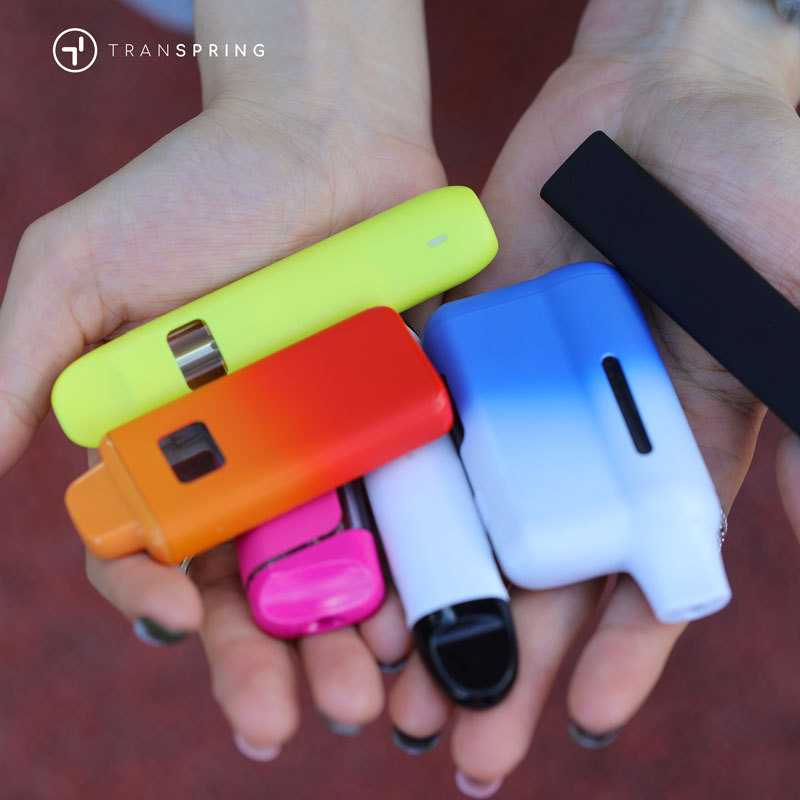
To showcase unique brand identity, many vape brands choose to develop their own exclusive disposable device. But where exactly do you start when creating a standout product? Whether you're a seasoned customization veteran or tackling a vape project for the first time, this article will give you clear, practical guidance.
What Customization Options Are Available for Disposable Vapes?
1. Exterior Design
When it comes to customization, the exterior design offers the most freedom. In theory, your disposable can be shaped into anything you envision. Beyond the common cylindrical, bar, and palm-style formats, you can also incorporate your brand elements:
● If your brand visuals feature a house, you can design the device in a house silhouette.
● If your brand connects to cannabis flower, you can shape the device like a flower to reinforce brand recall.
In short, as long as you have the creativity, capable suppliers can usually bring it to life.
2. How Material Choice Influences Disposable Vape Performance
Material selection is one of the core decisions in customization. It determines cost, but more importantly, it impacts the stability and reliability of key components.
So which materials deserve your attention?
2.1 Mouthpiece
2.1.1 PC (Polycarbonate)
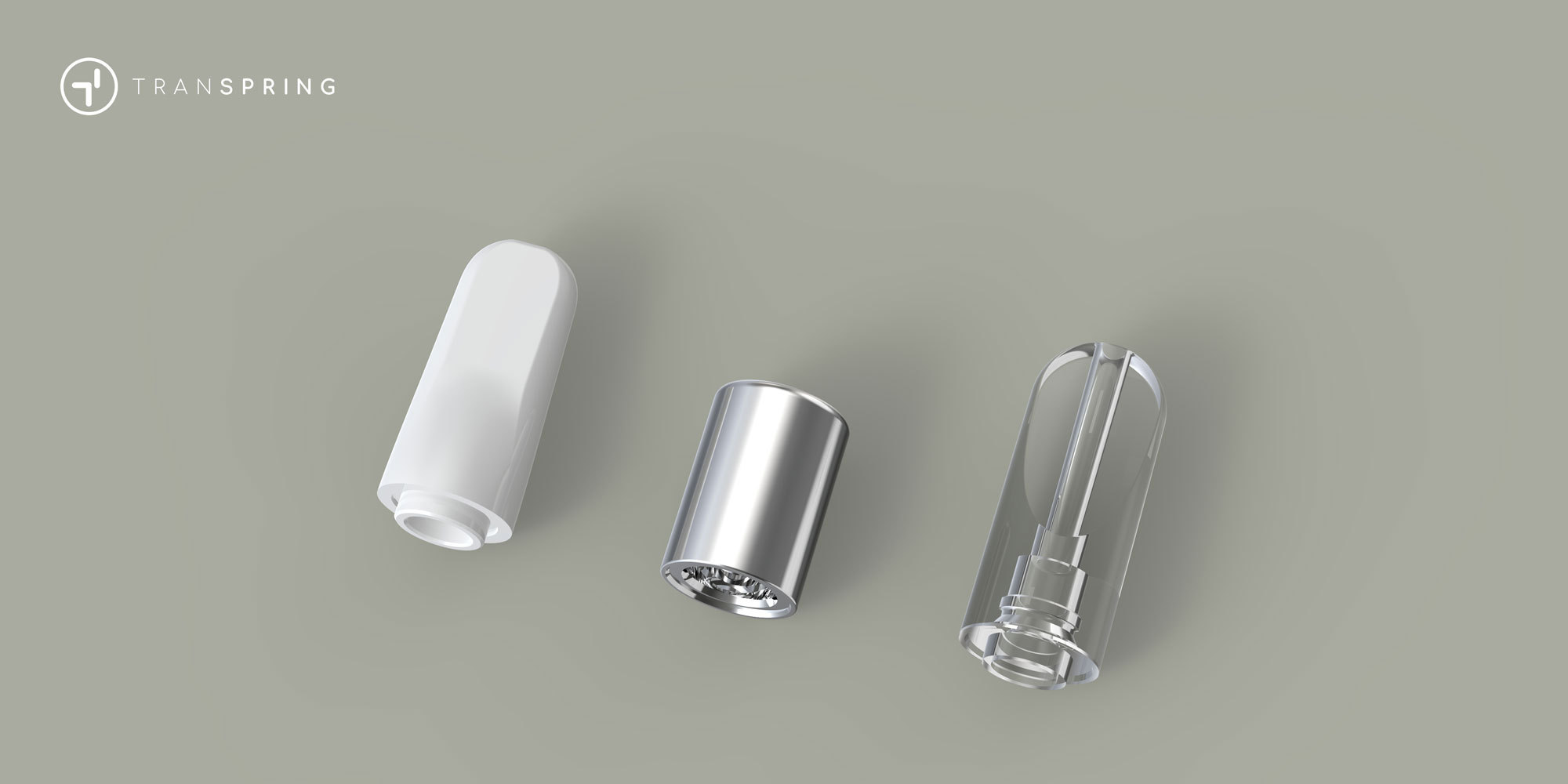
Most disposable mouthpieces on the market today are made of PC (plastic), regardless of shape — cylindrical, bar-style, palm-style, etc. The reasons are straightforward:
● Safe & stable: PC is food-grade. While BPA may release at 70°C, the mouthpiece is located far from the heating core, and its actual temperature stays well below that threshold—making it a very safe option.
● Highly customizable: Injection molding allows virtually any shape; color matching can achieve any desired tone.
● Cost-effective: After the one-time mold cost, mass-production pricing is extremely competitive.
● Mold lead time: Approximately 20–30 days.
2.1.2 Metal & Ceramic
Metal and ceramic mouthpieces are more common in 510 cartridges than in disposables. Their usage in disposables is limited mainly because:
● Costs are higher (especially for custom shapes)
● Customization flexibility is lower compared to plastic
Typically, they are used only for cylindrical-style disposables.
Lead time reference:
Alloy: Requires mold; longer lead time
Chrome-plated copper: No mold required; CNC machining; shortest lead time
Ceramic: Requires mold; around one month
Overall, PC mouthpieces offer the best balance of cost, flexibility, and performance.
Metal and ceramic are great for a premium feel but are only practical for **cylindrical** designs—anything irregular will make costs skyrocket.
2.2 Tank
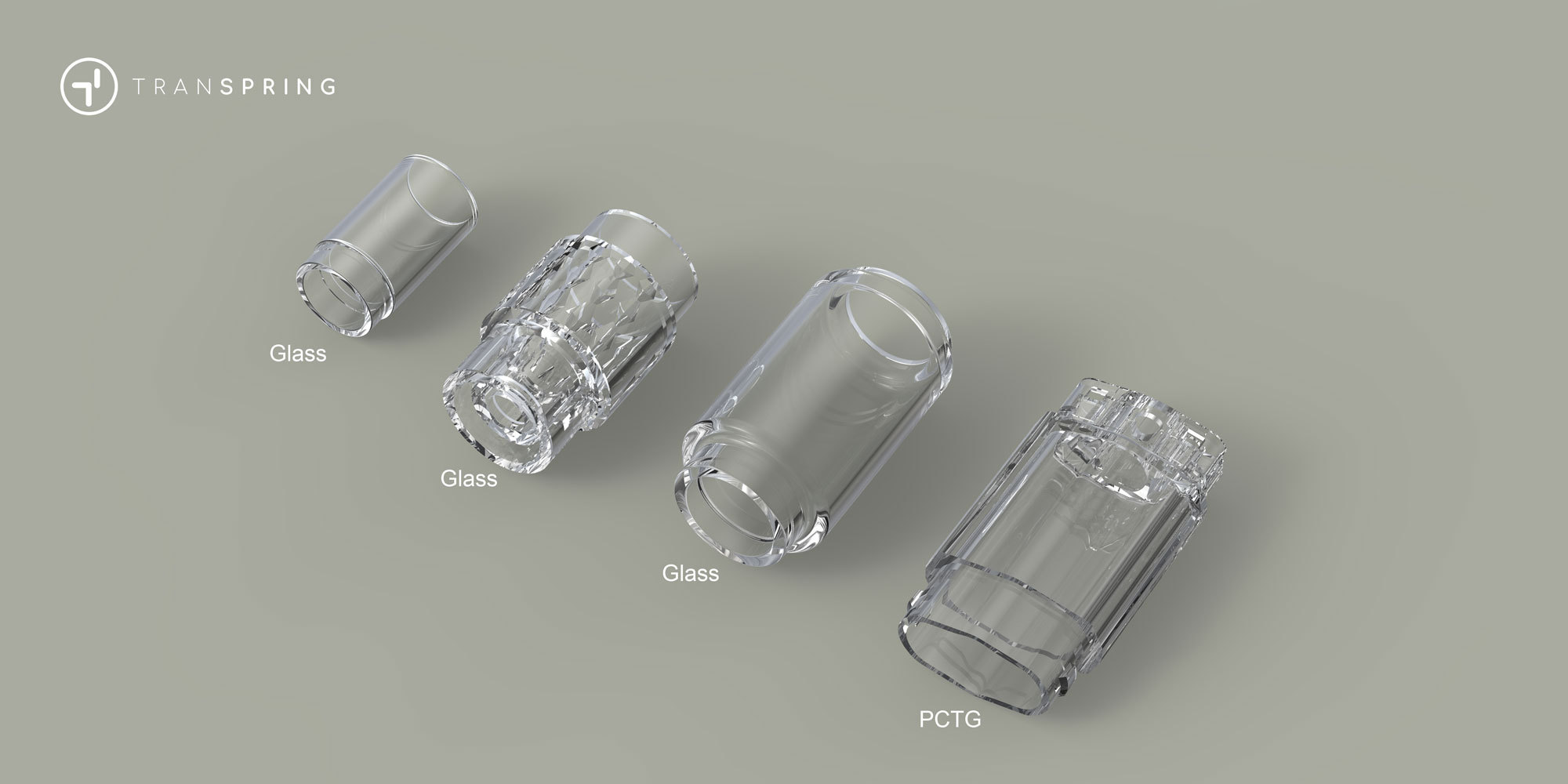
Regardless of material, the tank needs to be transparent since consumers want to see the oil level. The most common materials are PC, PCTG, and glass. At Transpring, we recommend PCTG or glass.
Cylindrical tanks: Glass offers the best value—it looks premium, has excellent chemical stability, doesn’t react with cannabis concentrates, and is reasonably priced.
Irregular tanks: PCTG is preferred. Irregular glass tanks require high MOQs, cost more, and complicate production, while PCTG delivers high chemical resistance and durability at a lower cost.
How about PC?
Although PC material is the cheaper than PCTG and glass, its chemical resistance is significantly weaker than either of them. When in contact with some terpenes especially Limonene, PC may react—leading to cracking. But if you've already tested the PC tank with your oil and confirmed it's perfectly compatible with no issues, and the PC tank itself is also fine.
Summary:
Cylindrical tanks → Glass
Irregular tanks → PCTG/PC (You need to test the PC tank with your oil to confirm compatibility before using it)
2.3 Device Housing
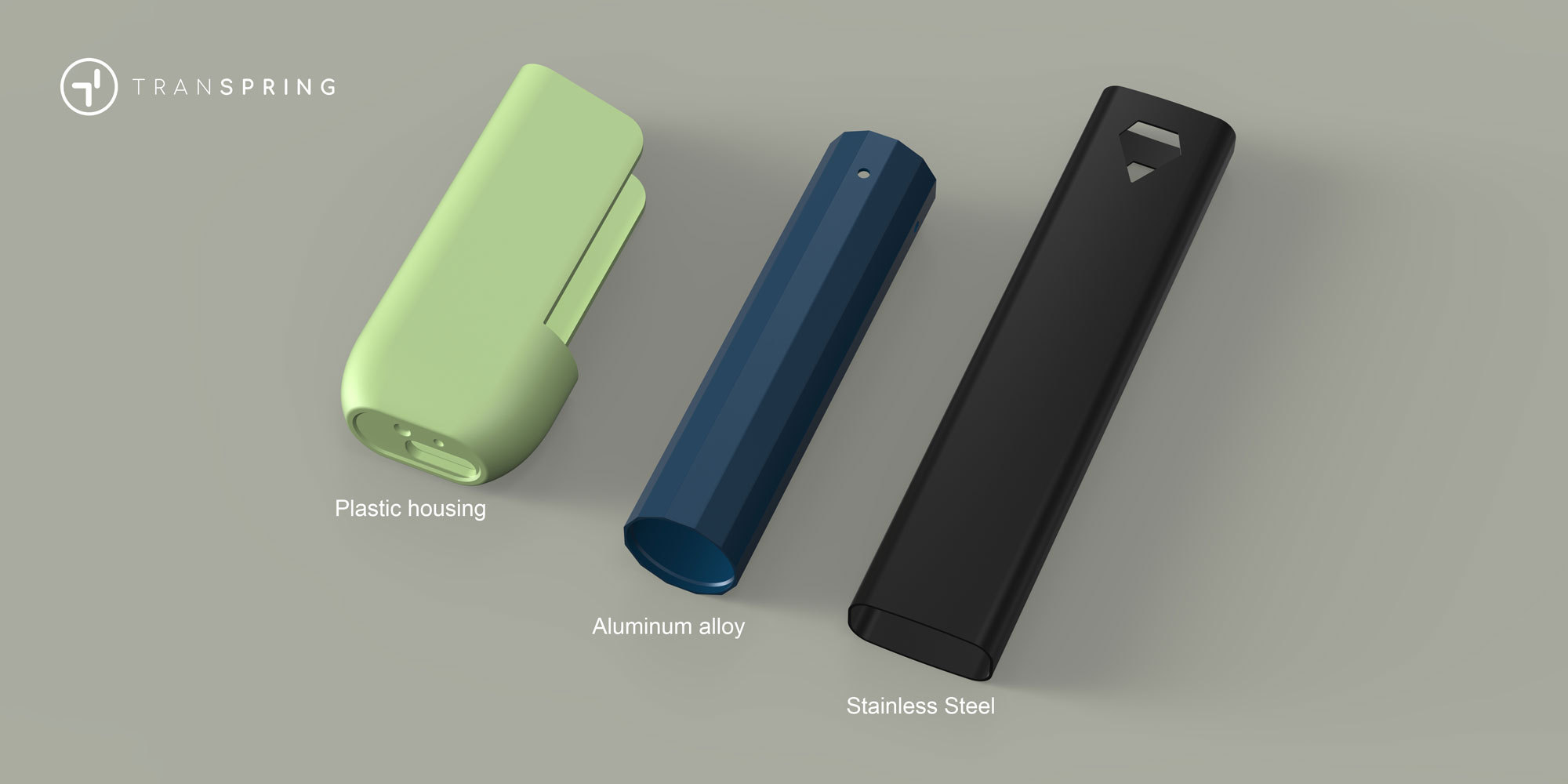
Common materials for the main housing of a disposable include PC plastic, stainless steel, and aluminum alloy. Here’s how they compare.
For cylindrical or bar-style devices:
● Stainless steel: Best cost-performance ratio—low cost, strong structural stability, and a good tactile feel.
● Aluminum alloy: Ideal for brands aiming for a premium metallic finish; anodizing can produce elegant matte textures. However, cost increases several-fold, so it's not budget-friendly.
● Plastic housing: Structurally feasible, but mold costs are high, timelines are long, the feel is inferior to metal, and the per-unit cost is higher than stainless steel. As a result, few brands choose plastic for cylindrical shells.
For irregular-shaped housings, PC plastic dominates the market (99%) because:
● It’s the most economical
● It supports nearly any shape
● It offers the best process stability and feasibility
Irregular metal housings are technically possible but cost several times more—generally not recommended.
Final Thoughts
This article focused on two core customization dimensions: external design and material selection. We hope this gives you practical clarity for your next project. If you still have questions about customization, feel free to reach out anytime.
In the next article, we’ll dive into surface-finishing options for disposables and how battery selection impacts device performance. If you're interested in these topics, follow us on LinkedIn—we’ll continue sharing professional, high-value content.