How Long Do Cannabis Vape 510 Batteries Take to Charge?
- Share
- Issue Time
- May 11,2026
Summary
In this guide, we’ll break down how long 510 cannabis vape batteries typically take to charge and what affects charging speed.
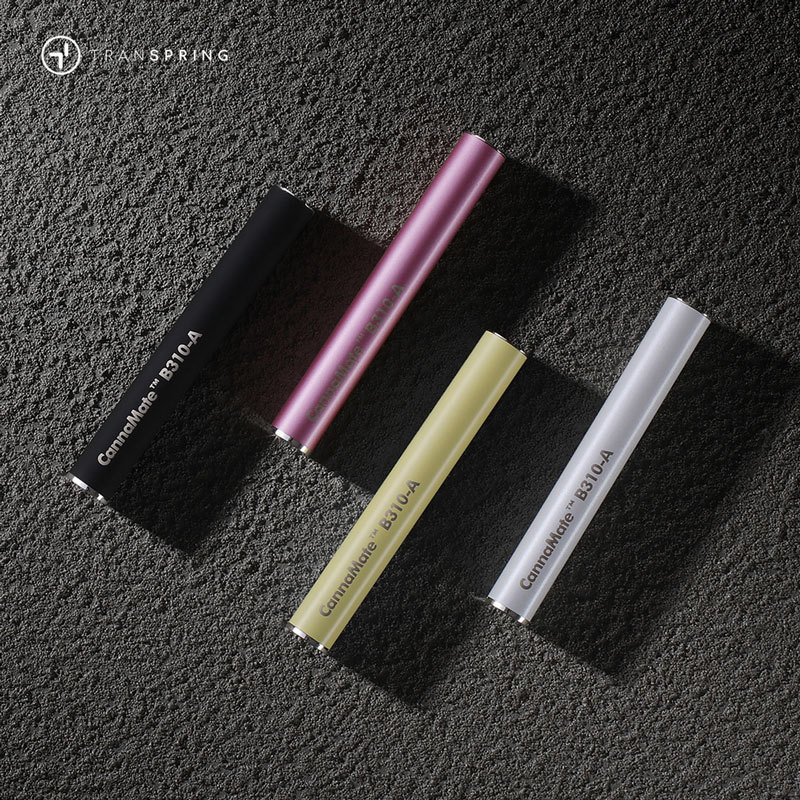

Charging Time by Battery Capacity
510 batteries come in a wide range of capacities, typically measured in milliampere-hours (mAh). Larger capacity means longer runtime, but also a longer charge cycle.
| Battery Capacity | Estimated Charge Time (Standard Charger) |
| 180–350 mAh | 30–60 minutes |
| 400–650 mAh | 1–2 hours |
Standard Chargers vs. Fast Chargers
The type of charger you use also has a major impact on charging speed.
Most traditional chargers provide lower current output, usually around 0.5A. They charge more slowly but generate less heat, which can help preserve long-term battery health.
Fast chargers, typically delivering 1A or higher, can cut charging time by 30–50%. However, not all 510 batteries support fast charging. Check your device specs before plugging into a high-output charger. Using an incompatible fast charger can generate excess heat and accelerate battery wear over time.
Quick comparison:
Standard charger (0.5A): Safer for long-term battery health; best for overnight or leisurely charging.
Fast charger (1A+): Great when you're in a hurry; only use if the manufacturer supports it.
A general rule: if the battery gets noticeably warm during a fast charge, switch to a standard charger.

Healthy Battery vs. Degraded Battery
Battery age and condition matter just as much as capacity and charger speed.
A healthy, new battery charges predictably, it accepts current efficiently, and reaches full capacity within the expected window. The charge curve is smooth, and the battery holds its charge well between sessions.
A degraded battery, one that has gone through many charge cycles or has been exposed to extreme heat or cold, behaves differently. You may notice:
Faster apparent charging: A degraded cell reaches "full" faster because its actual usable capacity has shrunk. The battery isn't holding more charge; it's holding less.
Shorter runtime after charging: Despite showing a full charge, the battery drains in a fraction of the usual time.
Inconsistent charging behavior: The battery may stop accepting a charge partway through, or the indicator light may behave erratically.
Most 510 batteries are rated for 300–500 full charge cycles before significant degradation sets in. If your battery is more than 1–2 years old with regular daily use, it's likely operating well below its original capacity.
Practical Tips
Don't charge to 100% every time if your device allows partial charging; stopping at around 80% can extend overall battery lifespan.
Avoid charging in extreme temperatures. Both hot and cold environments slow charging and stress the cells.
Don't leave it plugged in overnight. Most 510 batteries lack sophisticated overcharge protection.
Check the instructions, and understand your battery's capacity and condition, which takes the guesswork out of charging. Whether you're squeezing in a quick top-up before heading out or doing a full overnight charge, knowing what to expect keeps you one step ahead.