Missouri's Cannabis Vape Market: A High-Potential Frontier Worth Watching
- Share
- Issue Time
- Jun 6,2026
Summary
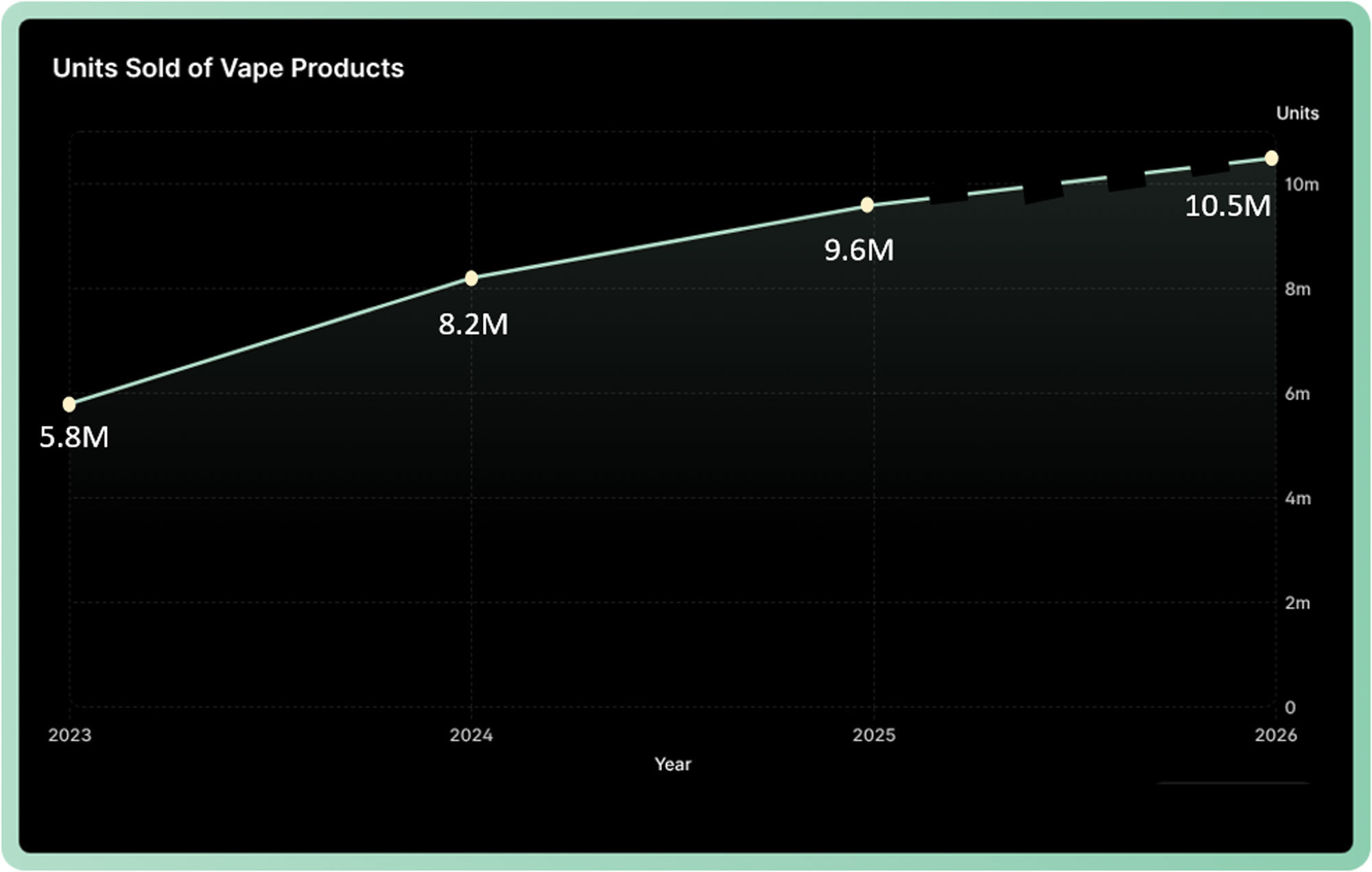
For cannabis vape brands and hardware manufacturers, Missouri offers a unique combination of expanding sales volume, relatively high retail prices, and a market structure that still leaves room for innovation.
A Market Built on Premium Pricing
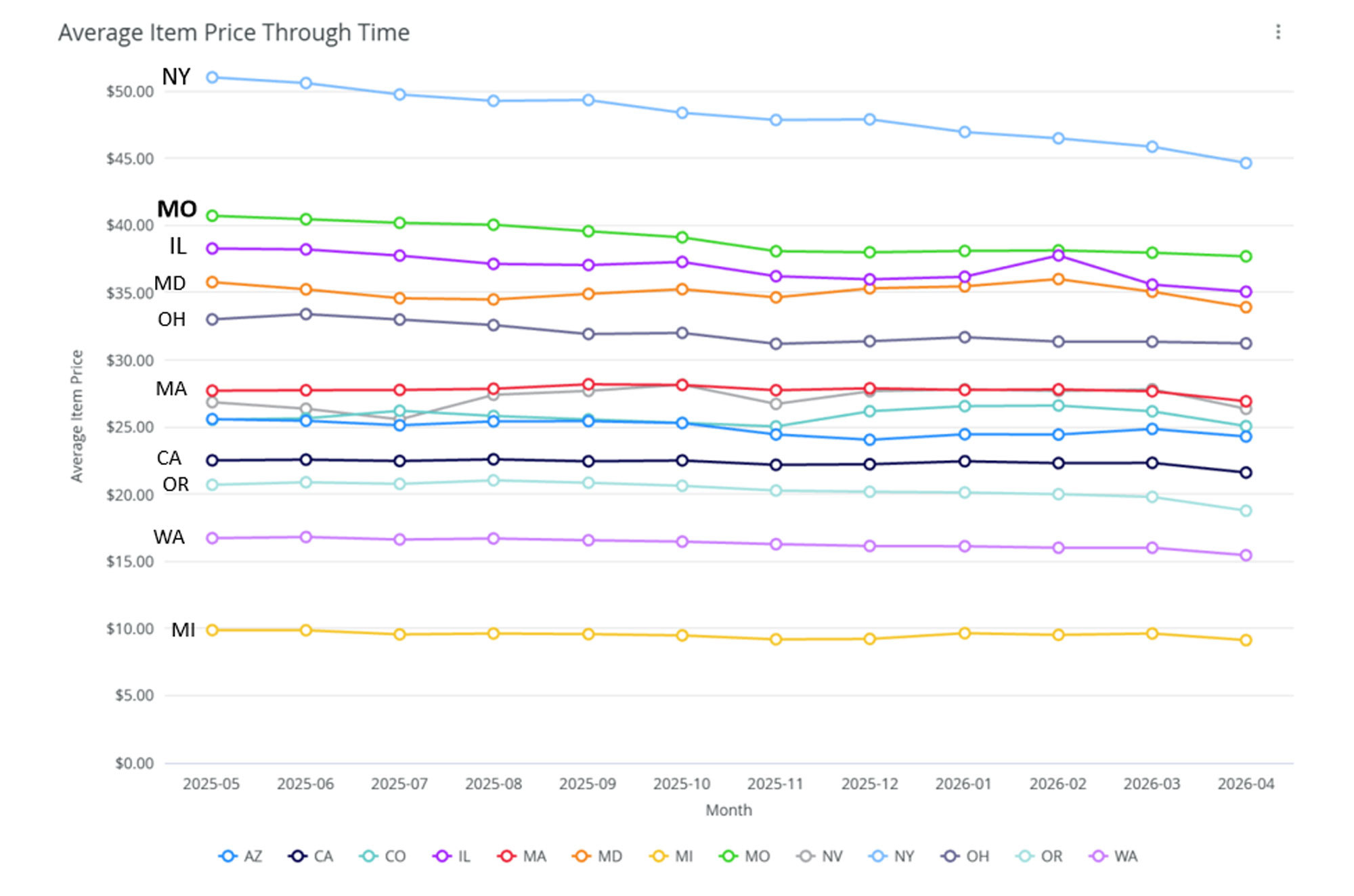
One of Missouri's most striking characteristics is where it sits on the price ladder. Among all legal cannabis states, Missouri's vape prices rank second highest in the nation, trailing only New York. The average retail price for a vape product currently hovers around $36, down from over $40 in early 2024, reflecting a gradual but steady softening in line with broader market maturation. Yet even at these declining price points, Missouri commands a premium that most states simply cannot replicate.
This pricing dynamic is crucial to understanding the market's true scale. Missouri's vape sales revenue ranks near the top nationally, surpassing more established markets like Massachusetts, Washington, and Colorado, even though its unit sales volume ranks considerably lower. In plain terms: Missouri sells fewer vapes than many competitors, but it sells them at meaningfully higher prices. For brands evaluating where to compete, this is a signal worth taking seriously.
Cartridges or Disposables: Which Format Is Winning?
Within Missouri's vape segment, cannabis cartridges hold the commanding position, accounting for 59.7% of vape market revenue compared to disposable vapes at 40.3%. This cartridge-heavy orientation distinguishes Missouri from some other states and has clear implications for product strategy.
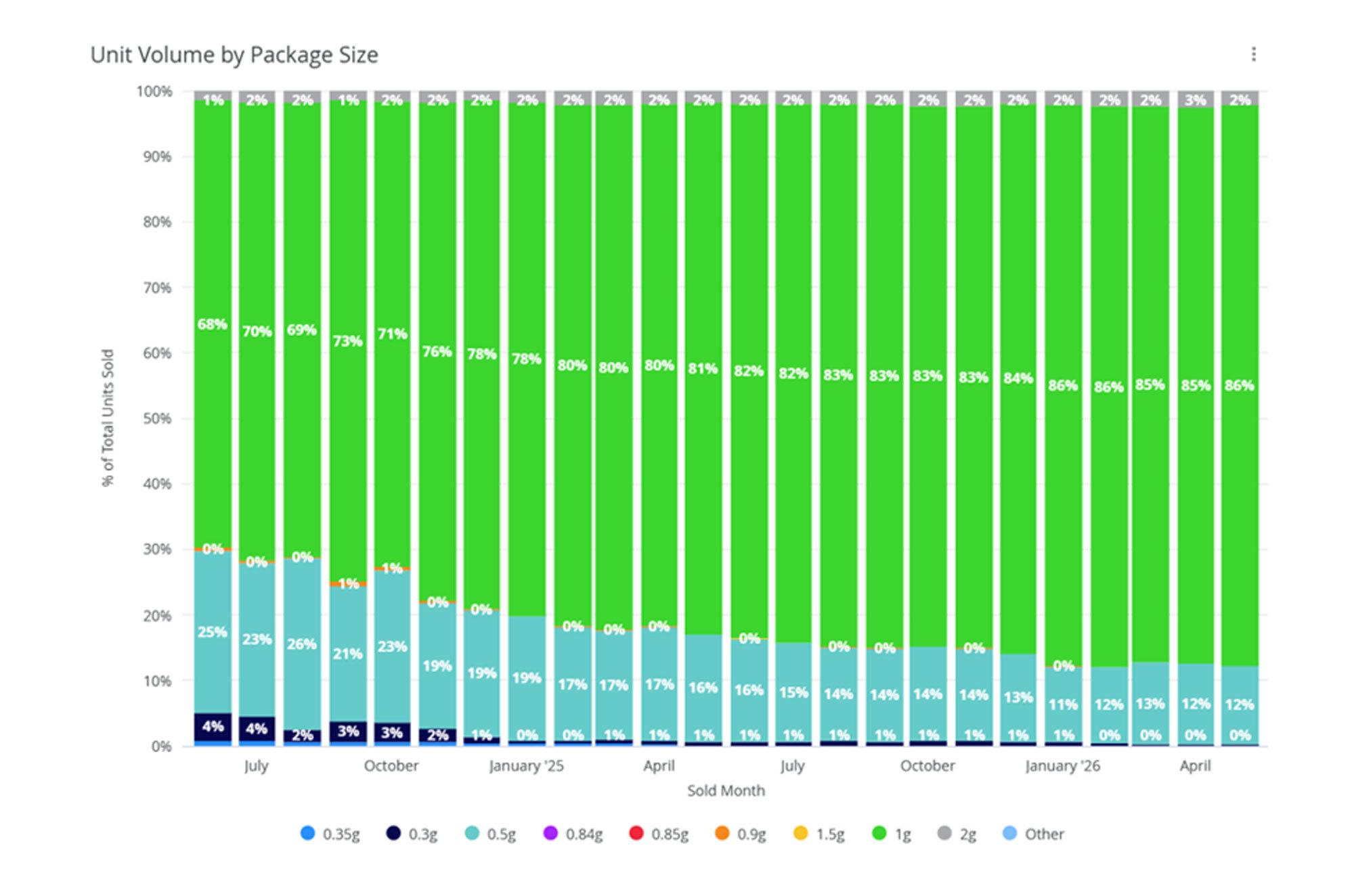
The 1g format has become the undisputed winner across both categories. In cartridges, the 1g size now commands a staggering 91% of sales volume, with the 0.5g format holding a diminishing share of just 8–9%. The disposable segment tells a similar story: 1g disposables have grown from 62% market share in February 2025 to 75% by February 2026 — a 13-percentage-point gain in a single year — while 0.5g disposables have retreated from 30% to 18% over the same period.
The 2g disposable format is a quiet but notable subplot. Currently occupying a 5–6% share of the disposable market, it is positioned to grow as consumers seek more value per purchase and as competition intensifies at the lower end of the market.
What Oil Types Are Missouri Consumers Actually Buying?
When it comes to oil types, Missouri is decisively a distillate market. Distillate accounts for 79.65% of oil-based product sales, with live resin in a distant second at 16.39%, and rosin at just 2.69%. Distillate's dominance is not only structural but directional — it has been on an upward trend over the past year and a half, while live resin, despite being the clear runner-up, has grown modestly. All other oil formats remain niche.
For brands evaluating Missouri, this means distillate-forward product lines are essential for building volume, while live resin offers a meaningful premium-tier opportunity. The market's appetite for more exotic formats like rosin or full-spectrum remains limited for now, though competitive pressure may eventually pull consumer interest in that direction.

Which Brands Are Leading and Where Do They Come From?
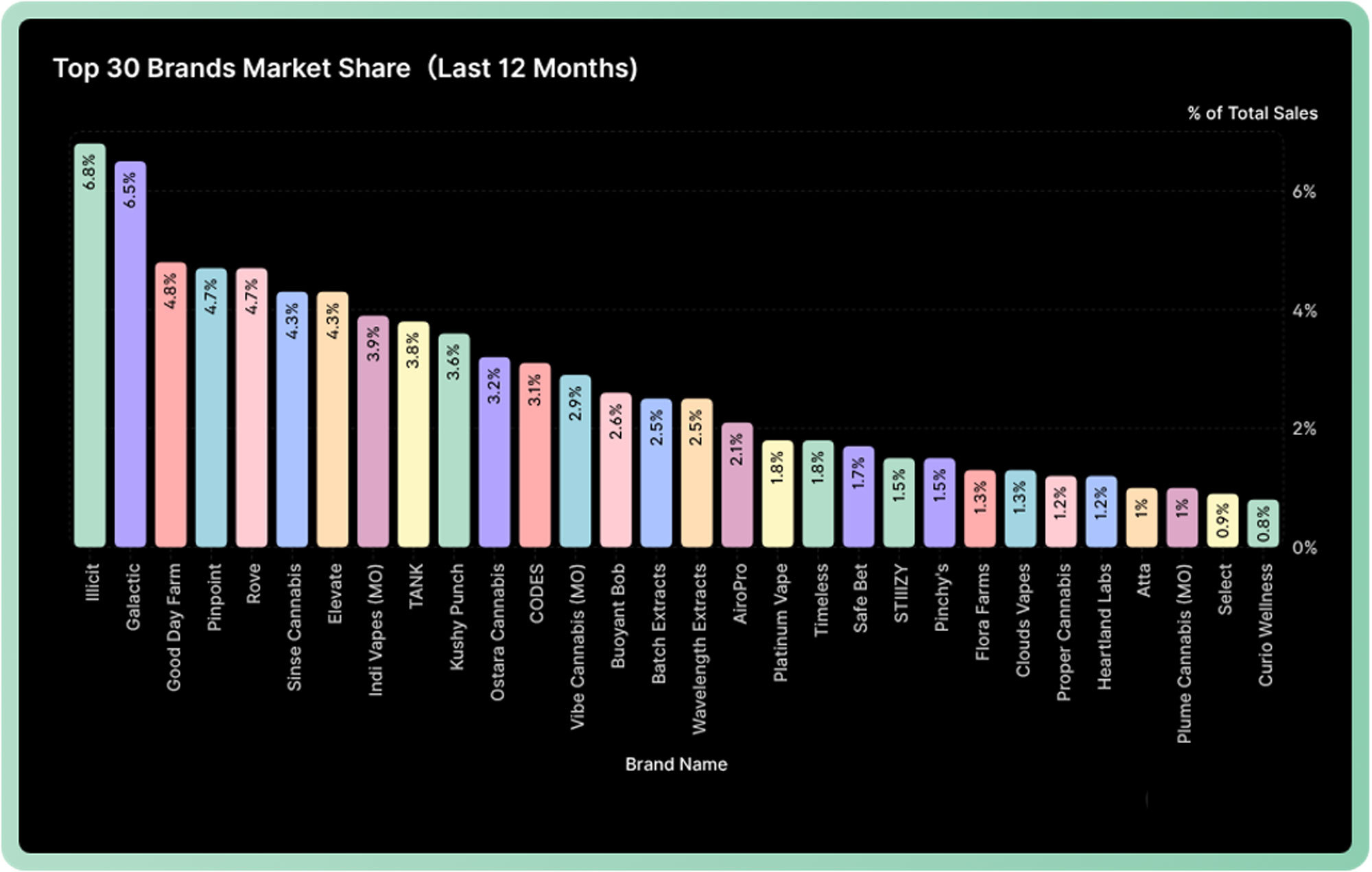
Missouri's top vape brands skew local — 52% of the top 25 by revenue are Missouri-based. This demonstrates that local operators have been highly successful in building consumer trust and retail distribution. But out-of-state players are making a meaningful mark, and two states in particular stand out: California and Michigan.
California brands (ROVE, Kushy Punch, STIIIZY) occupy the premium end of the market, priced above $46 and anchored by strong brand equity. This is no accident. California legalized recreational cannabis in 2016, giving its brands nearly a decade of product refinement, consumer education, and brand-building before they ever crossed state lines. That head start translates into polished formulations, mature marketing playbooks, and a premium positioning that Missouri consumers — accustomed to paying top dollar — are clearly willing to embrace.
Michigan brands, by contrast, have taken the opposite approach. Platinum Vape and Galactic compete firmly in the value segment, leveraging cost efficiencies honed in one of the most price-competitive legal markets in the country. Michigan's notoriously low cannabis prices have forced its producers to master lean operations and high-volume output, advantages that travel well into new markets where undercutting local incumbents is a viable path to shelf space.
So, Is Missouri Worth Entering?
Missouri has rapidly emerged as one of the most promising cannabis vape markets in the United States. Strong sales growth, premium pricing, increasing vape adoption, and a still-developing competitive landscape create favorable conditions for both cannabis brands and hardware manufacturers.
For brands and investors, the strategic imperatives are clear: build for cartridge-first, lean into distillate as the volume driver while developing a live resin premium tier, and move quickly. Missouri is a market still in the process of forming its winners and losers. The continued migration of consumers from 0.5g to 1g formats signals a maturing consumer base willing to spend more per transaction. The 2g format, while small today, represents an emerging opportunity as consumers seek greater value and as innovation in hardware makes larger formats more practical. The window for establishing meaningful market share, before the competitive dynamics fully consolidate, remains open. But it will not stay open forever.